
Is Trustpilot Still Reliable or Filled with Fake Reviews?

What Businesses and Consumers Should Know About Online Reviews
Online reviews play a major role in how people choose products and services today.
Platforms like Trustpilot have become go-to sources of feedback, helping consumers make faster, more informed decisions.
But here’s the reality:
Reviews influence decisions — but they don’t tell the full story.
To use them properly, you need to understand how they actually work.
What Is Trustpilot?
Trustpilot is a global review platform founded in 2007 that allows customers to share their experiences with businesses.
With millions of reviews across industries, it has become one of the most recognized platforms for online feedback.
Its mission is simple:
Increase transparency between businesses and consumers
But like any platform, its structure shapes how information is presented.
How Review Platforms Actually Work
Most review platforms including Trustpilot, are built to serve both:
- Consumers looking for honest feedback
- Businesses managing their reputation
Businesses can:
- Respond to reviews
- Request feedback from customers
- Use paid tools to manage and optimize their profiles
These features improve engagement but they also influence how reviews are collected, displayed and perceived.
How to Read Reviews More Accurately
If you rely on reviews, context is everything.
Here are the key dynamics most people overlook:
1. Participation Bias
Not every customer leaves a review.
Typically:
- Very happy customers speak up
- Very unhappy customers speak up
- The majority stay silent
Result: The “average experience” is often missing.
2. Review Collection
Many businesses actively ask for reviews.
This can:
- Increase volume
- Highlight recent experiences
- Skew toward more positive interactions
3. Moderation & Filtering
Platforms use both:
- Automated systems
- Human moderation
To remove:
- Spam
- Inappropriate content
- Suspicious activity
This means some reviews may be:
- Delayed
- Flagged
- Removed
4. Platform Features & Visibility
Paid tools may affect:
- Profile visibility
- How reviews are displayed
- How businesses present themselves
Patterns to Watch For
Across all platforms, certain patterns appear frequently:
- Clusters of reviews in short timeframes
- Repeated wording across multiple reviews
- Very short or overly generic feedback
These are not automatically negative but they are signals worth evaluating.
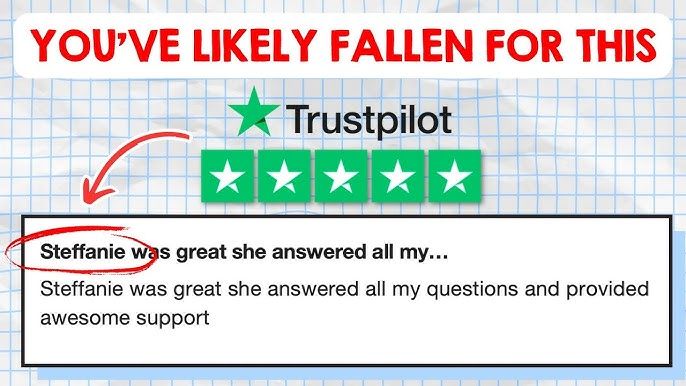
A Common Pattern Most People Miss
You’ve probably seen this before:
“Steffanie was great, she answered all my questions.”
“Amazing service from Steffanie!”
“Steffanie was incredibly helpful!”
“Thanks Steffanie, highly recommended!”
At first glance, this looks like great service.
And often—it is.
But when patterns repeat consistently, it’s worth understanding why.
What Could Be Happening?
Many businesses encourage customers to leave reviews (which is normal).
In some cases, staff may:
- Introduce themselves clearly
- Ask to be mentioned in feedback
- Prompt reviews after positive interactions
Business can:
- Motivate employees with incentives when name is mentioned in review
- Improve service quality
- Increase review volume
Where It Gets Subtle
Over time, this can shape how reviews are written:
- Customers focus on individuals, not the full experience
- Positive moments are more likely to be shared
- Neutral experiences are underrepresented
Result:
A profile that highlights strong moments but not always the complete picture.
The Bigger Insight
Review platforms are useful.
But they show signals — not the full reality.
Because:
- Not every customer leaves feedback
- Reviews are often prompted
- Platforms filter and organize content differently
Where Trust Is Actually Won (or Lost)
Here’s what really happens:
- A customer sees your reviews
- They get interested
- They click your website
- They leave
Not because of your reviews—
But because your website didn’t build trust.
The Hidden Gap Most Businesses Ignore
You can have:
- 1,000+ five-star reviews
- A strong platform presence
- High visibility
But still lose customers instantly.
Why?
Because:
Reviews create interest — but your website must convert it.
What Smart Businesses Do Differently
The most effective businesses don’t rely on a single platform.
They focus on three things:
1. Owning Their Reputation
If all your credibility lives on third-party platforms—
You don’t control it.
Smart businesses:
- Showcase testimonials on their own website
- Highlight real customer outcomes
- Build assets they actually own
2. Turning Their Website Into a Trust Engine
Your website is where decisions happen.
Not Trustpilot. Not Google.
But most websites:
- Look outdated
- Lack clarity
- Don’t show proof
- Fail to convert
3. Showing Proof — Not Just Ratings
Instead of saying:
“⭐⭐⭐⭐⭐ 1,000 reviews”
High-performing businesses show:
- Real client stories
- Before → after transformations
- Measurable results
That’s what builds trust.
Real Talk: What You Actually Need
You don’t need:
- More random reviews
- Another platform profile
- More traffic that doesn’t convert
You need a website that:
- Builds trust instantly
- Communicates value clearly
- Converts visitors into enquiries
How We Help
At KL Web Design, we focus on what actually drives results.
✅ Turn Traffic Into Leads
- Conversion-focused layouts
- Clear messaging
- Strategic call-to-actions
✅ Build Real Trust
- Testimonial systems
- Case study pages
- Authority positioning
✅ Take Control of Your Online Presence
- Fast, secure, custom-built websites
- SEO structure that attracts the right audience
- Ongoing support and maintenance
Who This Is For
- Businesses relying heavily on review platforms
- Companies with strong ratings but weak websites
- Owners getting traffic but no enquiries
- Businesses serious about scaling online
A Smarter Approach to Online Trust
Use platforms like Trustpilot—
But don’t depend on them.
The real advantage comes when you:
- Own your content
- Control your message
- Convert your visitors
Let’s Fix What Actually Matters
If your website isn’t converting visitors into leads—
There’s a reason.
Get a no-obligation website review